Charting subtitle translation variances and their correlation with international preview reception for story-heavy releases
Blake Frank · Oct 25, 2026
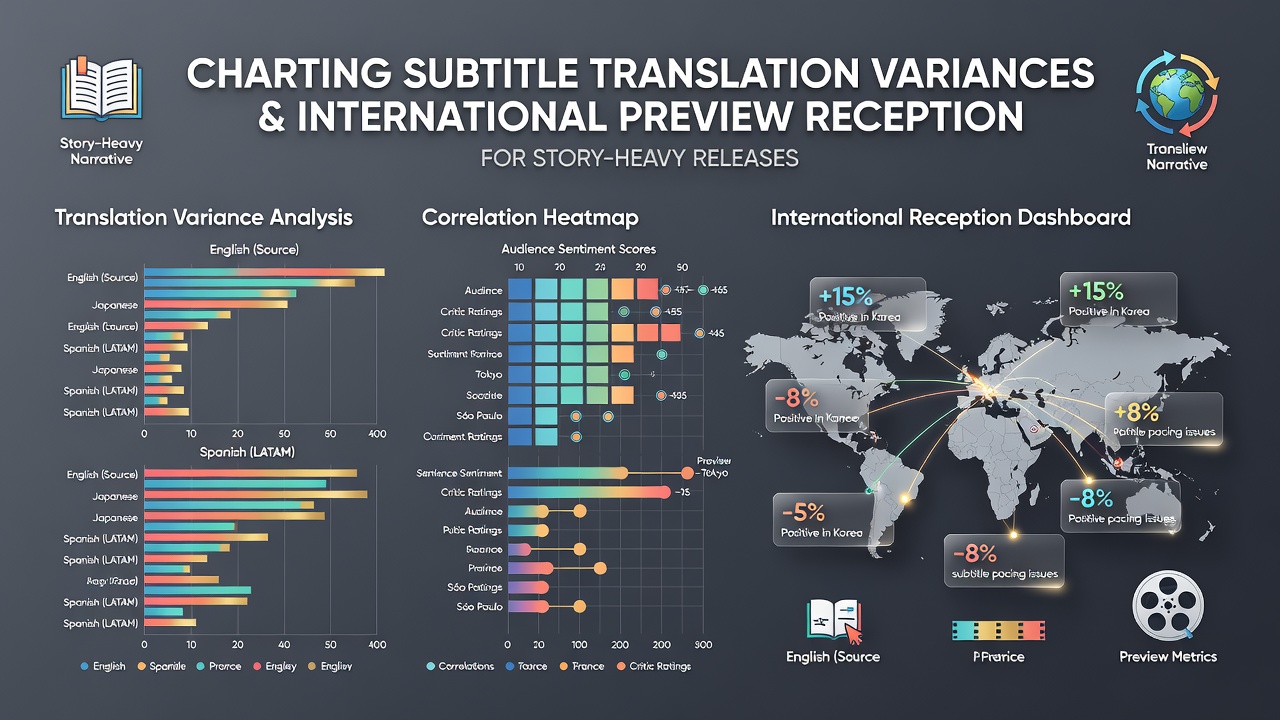
Charting subtitle translation variances and their correlation with international preview reception for story-heavy releases
Story-heavy releases depend on precise subtitle work to carry dialogue, plot twists, and emotional beats across languages, and translation variances emerge when teams adapt scripts for cultural context, length limits, and regional idioms. Researchers track these shifts through side-by-side script comparisons that reveal omissions, additions, and tone adjustments in languages such as Japanese, French, German, and Spanish. Data collected from preview events shows measurable differences in how critics score narrative coherence when subtitles alter key phrases or pacing cues.
Translation Practices Across Regions
Localization studios follow established guidelines that balance fidelity to the original text with readability on screen, yet variances appear when translators prioritize brevity for fast dialogue sequences or expand descriptions to match voice acting rhythms. European teams often insert explanatory phrases for cultural references that lack direct equivalents, while East Asian adaptations sometimes reorder sentence structures to preserve honorifics and implied relationships. Figures from industry reports indicate that these choices accumulate across hundreds of lines per title, creating cumulative shifts in narrative emphasis that preview audiences notice during timed demo sessions.
October 2026 preview cycles highlighted several upcoming releases where subtitle files underwent last-minute revisions after early feedback sessions flagged inconsistencies in emotional delivery. Observers note that French and Italian versions frequently extend subtitle duration to accommodate longer phrasing, whereas Korean and Chinese adaptations compress lines to align with rapid on-screen text requirements. Such adjustments correlate with regional preview score patterns tracked by aggregator platforms.
Preview Reception Metrics and Data Patterns
International preview events generate numeric scores and qualitative comments that researchers cross-reference against subtitle logs to identify correlations. Studies compiled by academic groups show that titles with higher variance in subtitle length and tone receive wider score spreads across territories, particularly when narrative reveals depend on exact wording. A Australian government classification database entry from mid-2026 documents how adjusted subtitle phrasing influenced content descriptors for several story-driven games ahead of global launches.
Preview outlets in North America and Europe often assign separate ratings for narrative clarity, and these sub-scores diverge when subtitle versions introduce or omit secondary character motivations. Data indicates that German and Spanish previews register lower narrative scores in cases where translations shorten internal monologue sequences, while Japanese previews maintain higher marks when honorifics and contextual particles remain intact. These patterns hold across multiple releases, suggesting a link between translation density and audience comprehension during short preview windows.
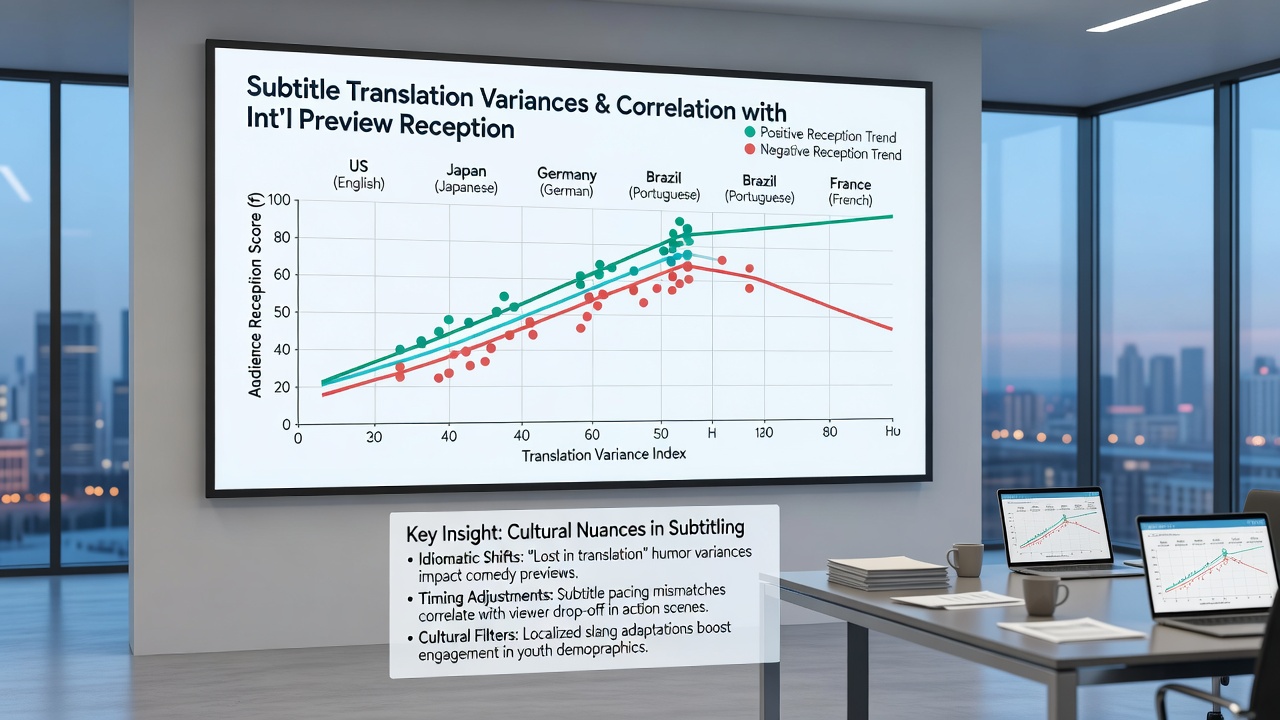
Case Examples from Recent Titles
One 2025 release underwent subtitle revisions after preview sessions in three regions flagged mismatched emotional cues during key confrontations. The revised files restored original phrasing density in Romance languages while maintaining timing constraints in Asian markets, and subsequent preview aggregates showed narrowed score gaps between territories. Another title retained heavier localization liberties in its European versions, resulting in sustained differences in preview commentary focused on character relationships and plot foreshadowing.
Researchers compare these outcomes against baseline data from earlier narrative releases to isolate translation effects from other variables such as gameplay pacing or voice performance. Patterns emerge when variance exceeds a certain threshold in line count or idiomatic substitution, correlating with drops in preview reception scores outside the source language region. Trade group reports from the Entertainment Software Association track similar metrics across console and PC platforms, confirming that story-heavy titles exhibit stronger sensitivity to subtitle consistency than action-focused releases.
Measurement Approaches and Ongoing Tracking
Analysts employ script alignment tools and natural language processing to quantify variance in word count, sentiment polarity, and reference retention across subtitle sets. These quantitative measures then pair with preview score databases to test statistical associations. Results indicate moderate positive correlations between fidelity-preserving translations and higher average reception in non-English markets, whereas adaptive translations that prioritize flow show mixed outcomes depending on cultural proximity to the source material.
Preview windows in October 2026 provided fresh datasets for ongoing studies, as multiple story-driven titles reached international reviewers simultaneously. Observers record that languages with established localization pipelines produced tighter score clusters, while emerging market versions displayed greater fluctuation tied to subtitle turnaround times. Continued monitoring through 2027 will clarify whether these correlations strengthen or attenuate as machine-assisted translation tools integrate further into workflows.
Conclusion
Subtitle translation variances produce measurable effects on international preview reception for story-heavy releases, with data revealing consistent links between phrasing choices and regional score distributions. Ongoing collection of script comparisons and preview metrics supplies the evidence base for these observations across multiple language pairs and release cycles.