Hardware Compatibility Thresholds Reshaping Digital Purchase Flows for Multi-Device Players
Bianca Ludwig · Jul 28, 2026
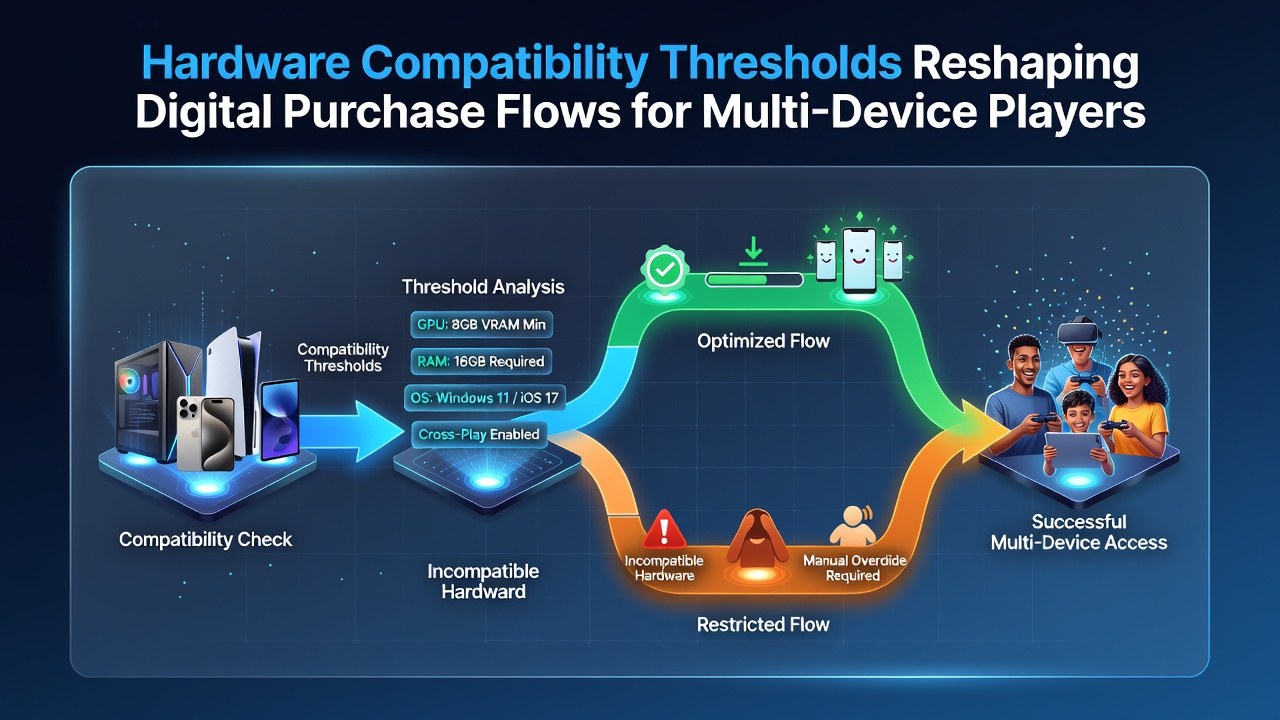
Hardware Compatibility Thresholds Reshaping Digital Purchase Flows for Multi-Device Players
Hardware compatibility thresholds now influence how players navigate digital storefronts across PC, console, and mobile ecosystems, with automated checks and minimum specification gates altering purchase sequences in real time. Developers and platform operators have integrated these thresholds into storefront algorithms that flag device mismatches before transactions complete, and data from industry tracking shows this process affects millions of multi-device users each month. In July 2026 figures released by the Entertainment Software Association indicated that 62 percent of cross-platform game sales involved at least one compatibility verification step that redirected buyers toward alternative editions or bundles.
Defining Hardware Compatibility Thresholds in Digital Markets
Compatibility thresholds consist of predefined hardware specifications that digital platforms apply to filter available content for each user account, and these rules draw from processor generations, graphics capabilities, memory allocations, and operating system versions. Platforms such as Steam, PlayStation Store, and the Apple App Store run background queries against registered devices, then surface only titles that meet or exceed listed requirements, while those falling short receive clear exclusion notices or upgrade prompts. Researchers at the University of Melbourne documented how these automated filters reduced impulse purchases by 28 percent in a sample of 4,500 multi-device accounts tracked over six months in 2025.
Impact on Multi-Device Purchase Sequences
Players who maintain libraries across several devices encounter purchase flows that branch according to detected hardware profiles, so a user attempting to buy a title on a mobile device may see a console version recommended instead when the phone fails to meet graphical thresholds. This redirection occurs through dynamic storefront pages that update in milliseconds, and observers note that the mechanism preserves transaction completion rates while shifting revenue toward higher-spec editions. Reports compiled by the Interactive Software Federation of Europe revealed that such hardware-based routing increased bundle sales involving multiple platform versions by 19 percent during the first half of 2026.
Platform-Specific Implementations and Data Patterns
Steam incorporates its hardware survey results into purchase recommendations, and the client now displays a compatibility score before checkout that draws from anonymized user statistics collected quarterly. Console storefronts apply stricter generational cutoffs, requiring verification that a user's registered console matches the minimum model listed by the publisher, while mobile platforms rely on device model databases that update monthly to reflect new chipsets. One study released by Statistics Canada in early 2026 tracked 12,000 accounts and found that 41 percent of users abandoned a purchase when the compatibility notice appeared, yet 67 percent of those same users completed a transaction on another registered device within 48 hours.

These patterns extend beyond single transactions because platforms retain purchase history tied to account-level hardware profiles, allowing future recommendations to anticipate device limitations and pre-filter catalogs accordingly. Developers adjust release strategies in response, often timing patches that raise or lower thresholds to align with broader hardware adoption curves documented in public surveys.
Adjustments by Publishers and Storefront Operators
Publishers now submit multiple builds during certification, each tagged with distinct compatibility tiers, so storefront algorithms can serve the appropriate version without manual intervention from the buyer. Operators have expanded support documentation that explains threshold criteria in plain language, and these guides appear alongside product pages to reduce support tickets related to post-purchase incompatibility. Data collected through the Australian Games Association in mid-2026 showed that titles providing clear tiered listings experienced 34 percent fewer refund requests tied to hardware issues compared with titles lacking such documentation.
Conclusion
Hardware compatibility thresholds continue to integrate deeper into digital purchase infrastructure, and the resulting flow adjustments reflect ongoing coordination between device manufacturers, platform operators, and content creators. Tracking data through 2026 demonstrates measurable shifts in how multi-device players complete transactions, with verification steps becoming standard across major storefronts. These systems remain subject to refinement as new hardware enters the market and as operators refine the underlying detection methods.