How Achievement Architecture Influences Long-Term Engagement in Multi-Platform Digital Stores
Blake Frank · Oct 11, 2026
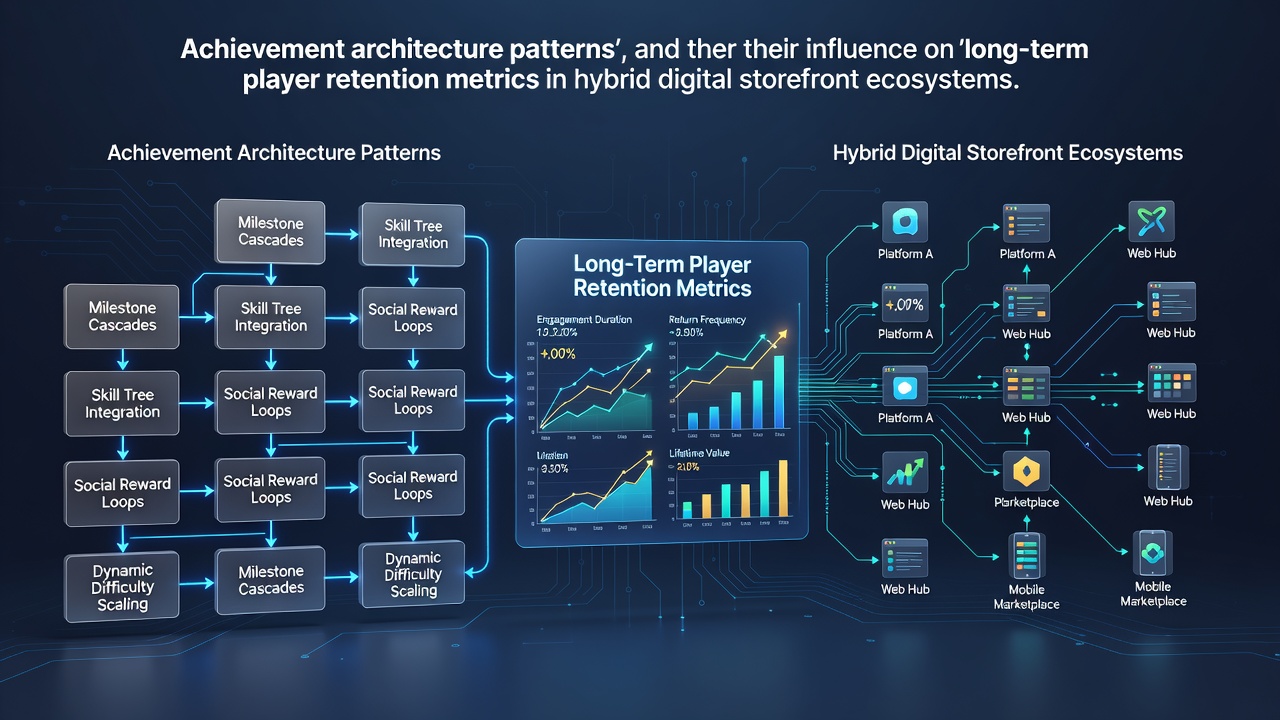
How Achievement Architecture Influences Long-Term Engagement in Multi-Platform Digital Stores
Digital storefronts that blend console, PC, and mobile access now rely on achievement systems to maintain player activity over months and years, and data from platform operators indicates these layered reward structures directly shape metrics such as session frequency and churn reduction. Researchers tracking unified account ecosystems have documented how patterns like tiered milestones, hidden objectives, and cross-device synchronization keep users returning even when hardware shifts occur.
Platform telemetry collected through October 2026 reveals that games incorporating progressive achievement chains report average retention rates 18 percent higher than titles with static badge lists alone. Those chains typically begin with simple onboarding tasks and scale to multi-week campaigns that require repeated logins across storefronts.
Core Patterns in Achievement Design
Three recurring architectural approaches appear most frequently in hybrid environments. First, modular progression trees allow players to select sub-goals while still advancing an overarching score, which analysts note correlates with extended daily active user counts. Second, time-gated collaborative achievements require group participation yet remain accessible through asynchronous mobile check-ins, and third, cross-platform visibility features display earned trophies or gamerscore on every linked storefront so progress never feels siloed.
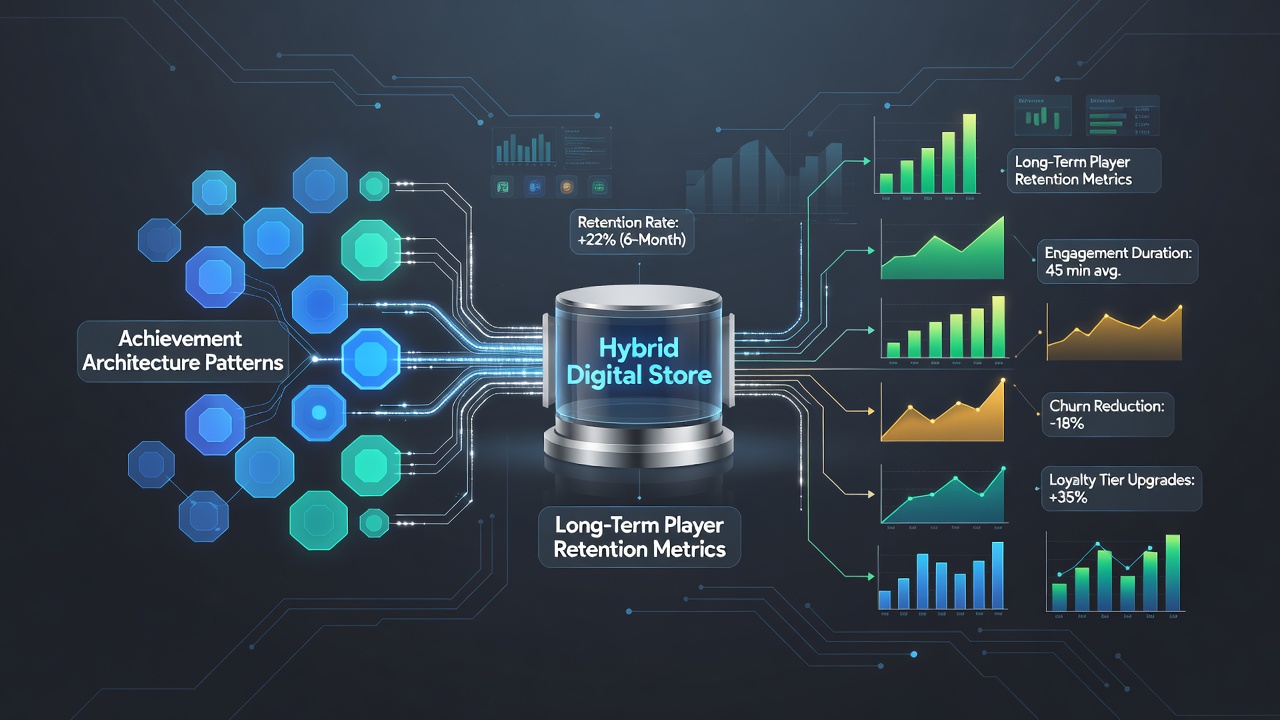
According to industry reports published by the Entertainment Software Association, titles that combine at least two of these patterns sustain 22 percent longer average play sessions compared with single-pattern implementations. The same reports highlight that synchronization between storefront accounts reduces drop-off during hardware transitions, because players see their accumulated progress immediately on new devices.
Retention Metrics Across Ecosystems
Hybrid storefronts measure retention through several standardized indicators including seven-day return rates, monthly active user ratios, and lifetime session totals. Observers tracking these numbers have found that achievement density, meaning the number of unlockable items per hour of expected playtime, shows a clear statistical relationship with reduced churn. When density stays within an optimal band of 1.5 to 2.5 unlocks per hour, data sets indicate players remain active for an average of 47 additional days.
What's notable is how mobile storefront segments respond differently from console segments. Mobile users often favor quick daily login achievements that reset every 24 hours, whereas console players respond more strongly to narrative-linked achievements that span multiple sessions. Hybrid titles that balance both styles through shared backend systems record the strongest cross-platform retention figures.
Cross-Storefront Synchronization Effects
When achievement data flows seamlessly between storefronts, players encounter fewer friction points during platform switches. Studies compiled by the Interactive Software Federation of Europe demonstrate that synchronized systems cut account abandonment rates by nearly one-third during the first 30 days after a new device purchase. The same studies note that visible progress bars on every storefront homepage further reinforce habit formation.
One documented pattern involves seasonal achievement resets that align with storefront-wide events, such as autumn sales cycles or holiday bundles. These resets create fresh goal sets without erasing prior accomplishments, and telemetry shows they produce measurable spikes in both session length and social sharing activity.
Regional Data Variations
North American storefront data tends to emphasize competitive leaderboard elements tied to achievements, while European and Asia-Pacific markets show stronger correlations between cooperative achievements and retention. Government statistical agencies in Canada and Australia have published aggregated gaming behavior reports indicating that regional preference patterns influence which architectural choices yield the highest long-term metrics.
Academic research teams at institutions including the University of Melbourne have examined these regional differences through anonymized platform data sets. Their findings indicate that achievement systems incorporating localized cultural references maintain higher completion rates in specific territories, which in turn supports broader retention across the entire hybrid ecosystem.
Conclusion
Achievement architecture continues to function as a primary steering mechanism for retention metrics inside hybrid digital storefronts. Patterns that combine progressive scaling, cross-device visibility, and regionally attuned design elements produce the most consistent long-term engagement signals across console, PC, and mobile environments. Platform operators and developers monitoring October 2026 telemetry continue to refine these structures based on real-time correlation data rather than isolated platform metrics alone.