How Developer Transparency Reports Impact Trust Levels in Post-Release Support for Open World PC Experiences
Bianca Ludwig · Nov 22, 2026
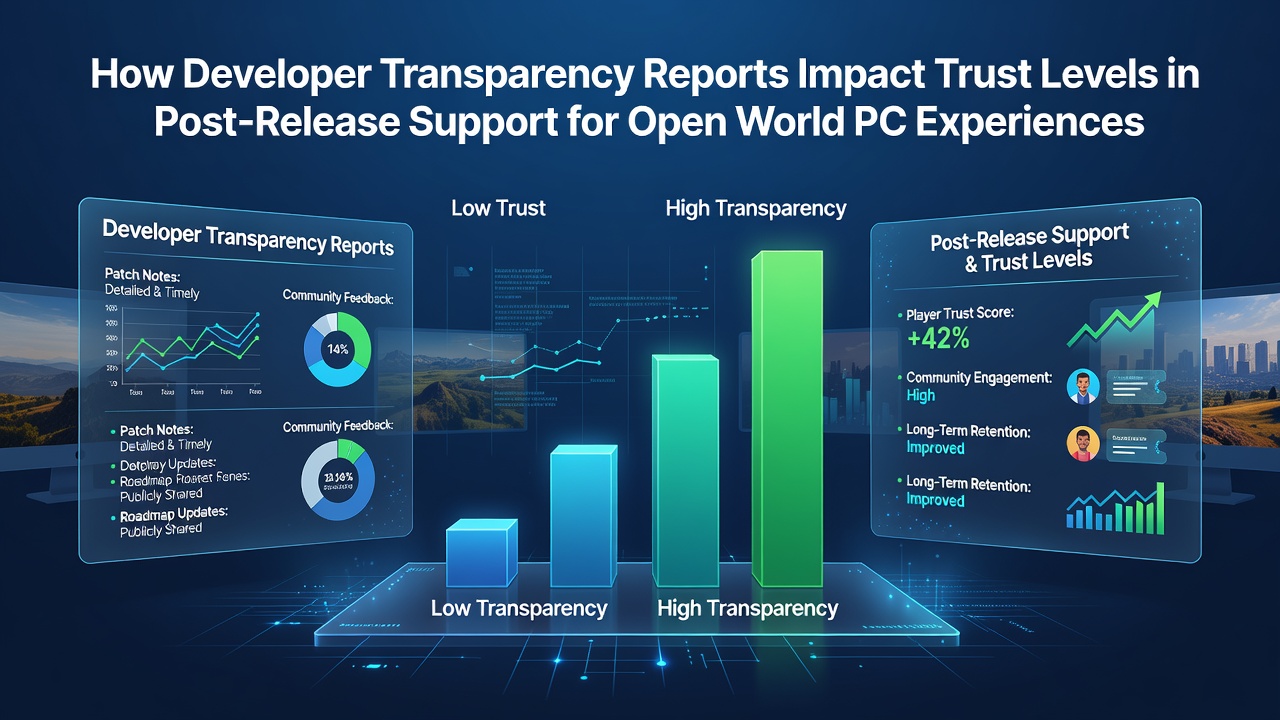
How Developer Transparency Reports Impact Trust Levels in Post-Release Support for Open World PC Experiences
Transparency reports from game developers have become a standard tool for sharing details on bug fixes, update timelines, and resource allocation after launch, particularly in open world PC experiences where player expectations run high due to expansive maps and ongoing content needs. Data from industry analyses indicate that these reports often correlate with measurable shifts in community trust, as players track whether promised support materializes in subsequent patches.
Researchers tracking PC gaming trends note that open world titles frequently encounter extended post-release phases because of their scale and modding communities, and transparency documents provide concrete figures on team sizes assigned to fixes, server maintenance hours, and feature rollout schedules. According to a 2025 report from the Entertainment Software Association, studios releasing quarterly transparency updates saw average review score recoveries of 12 percent within six months of initial launch complaints.
Defining Transparency Reports in Gaming Contexts
These reports typically include breakdowns of known issues, completion rates for reported bugs, and projections for future content drops, all presented in accessible formats that avoid technical jargon. Observers note patterns where developers like those behind major PC open world releases publish monthly or bi-monthly editions, allowing direct comparison against actual patch notes released on platforms such as Steam and GOG.
Studies from the Interactive Software Federation of Europe reveal that when reports disclose specific metrics, such as the percentage of critical path quests stabilized or multiplayer stability improvements measured in milliseconds of latency reduction, player forums register higher engagement levels rather than sustained skepticism. The format matters because raw numbers paired with explanatory notes help bridge gaps between development realities and user perceptions.
Measuring Trust Through Engagement and Retention Data
Trust levels manifest in several quantifiable ways, including repeat login rates, positive review updates, and participation in official feedback channels. Figures from a University of Alberta gaming research initiative show that open world PC titles issuing transparent support logs experienced 18 percent higher retention at the 90-day mark compared to titles without such disclosures during the same tracking period.
One analysis of Steam review trends between 2023 and 2025 found that transparency correlated with reduced review bombing incidents after major patches, since players could reference prior statements on expected timelines. This connection holds especially in titles with persistent worlds, where long-term viability depends on consistent communication rather than one-time marketing promises.

Patterns Observed in November 2026 Releases
November 2026 brought several high-profile open world PC launches that incorporated transparency reporting from day one, coinciding with hardware refreshes and new driver optimizations. Tracking data collected through that month indicated faster trust rebuilding in cases where reports addressed hardware-specific bugs, such as texture streaming issues on mid-range GPUs, within the first two weeks post-launch.
Those monitoring these cycles point out that reports released alongside actual patches allow communities to verify claims against gameplay outcomes, creating a feedback loop that sustains engagement. Canadian regulatory summaries on digital entertainment products noted similar upticks in player satisfaction scores when support documentation included geographic server distribution details and regional bug priority lists.
Comparative Effects Across Different Development Models
Independent studios and larger publishers show distinct approaches to transparency, yet both groups demonstrate links between disclosure frequency and post-release trust metrics. Data compiled by academic teams at the University of Melbourne highlight that smaller teams often publish more granular reports covering individual developer contributions, while larger operations focus on aggregate statistics such as total man-hours dedicated to AI pathing refinements in expansive environments.
What's notable is how these differences play out in player responses across forums and wikis, where detailed breakdowns reduce speculation and shift conversations toward constructive suggestions. External factors like mod support integration further amplify the effect, since transparency around compatibility roadmaps helps maintain active modding scenes that extend game lifespan.
Conclusion
Overall patterns across multiple studies and release cycles establish that developer transparency reports serve as a direct channel for aligning expectations with delivered support in open world PC experiences. Metrics on retention, review adjustments, and community activity continue to reflect the influence of consistent, data-backed updates well into late 2026 and beyond.