Latency Layers: Mapping Input Delay Variations in Competitive Esports Setups and Their Correlation with Win Rates in Fast-Paced Titles
Freya Foster · Aug 18, 2026
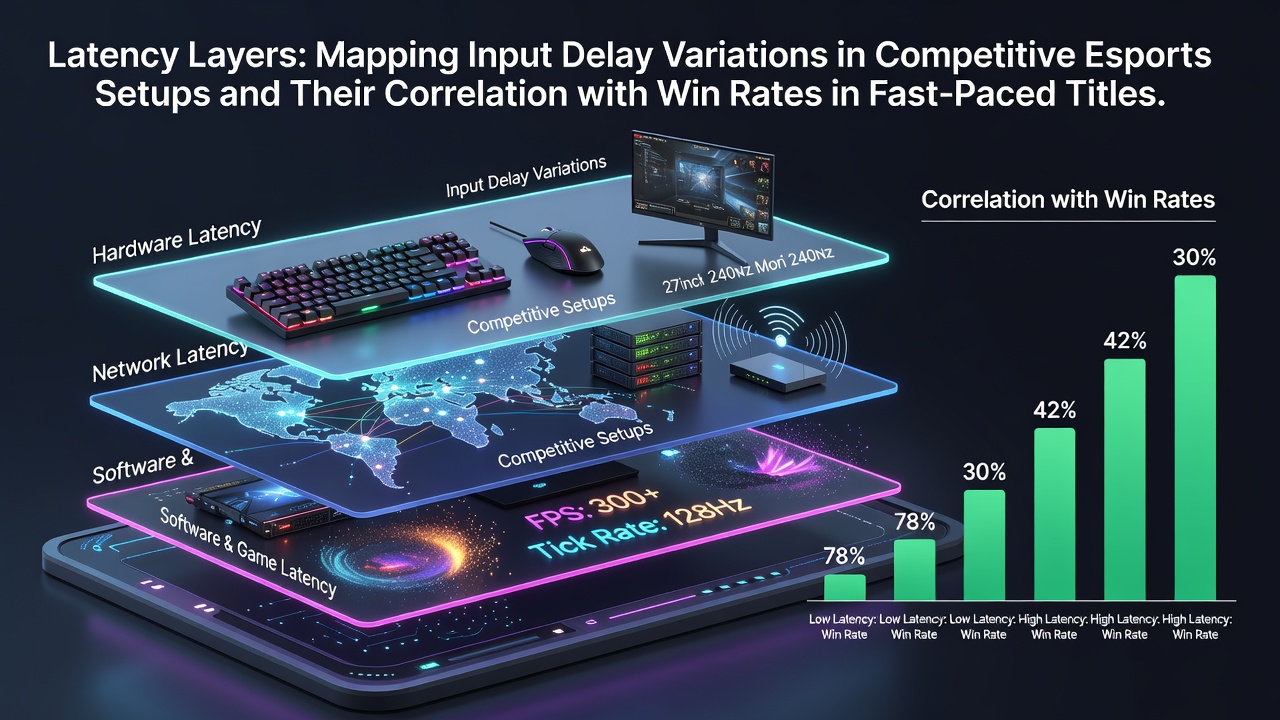
Latency Layers: Mapping Input Delay Variations in Competitive Esports Setups and Their Correlation with Win Rates in Fast-Paced Titles
Competitive esports setups involve multiple latency layers that accumulate across hardware and software pathways, and researchers have tracked these variations in fast-paced titles such as first-person shooters and fighting games. Data from tournament environments shows that input delays arise from controller polling rates, display refresh cycles, network transmission times, and operating system processing queues, with each layer contributing measurable milliseconds to total response time.
Components of Input Delay in Tournament Hardware
Observers note that wired controllers typically register inputs at 1-millisecond intervals while wireless models often introduce 4 to 8 milliseconds of additional polling overhead, and high-refresh-rate monitors running at 240 hertz reduce display lag compared to 144-hertz panels yet still interact with GPU rendering buffers. Network latency adds further variation because tournament organizers route traffic through dedicated servers that maintain ping values under 20 milliseconds within regional brackets, whereas public matchmaking pools frequently exceed 40 milliseconds during peak hours in August 2026.
Studies conducted by European research institutions have quantified how these stacked delays affect player reactions in titles where frame timing determines hit registration, and findings reveal that players using optimized setups experience total system latency between 25 and 35 milliseconds whereas standard consumer configurations range from 45 to 60 milliseconds under identical network conditions.
Measurement Methods and Tournament Data Collection
Technicians employ high-speed cameras and specialized oscilloscopes to capture the precise moment between physical button press and on-screen response, allowing analysts to isolate each latency layer without relying on in-game telemetry alone. Tournament operators in North America and Asia have compiled datasets from major events that include thousands of matches, and these records indicate consistent patterns where lower aggregate delay correlates with higher accuracy in tracking and flick shots.
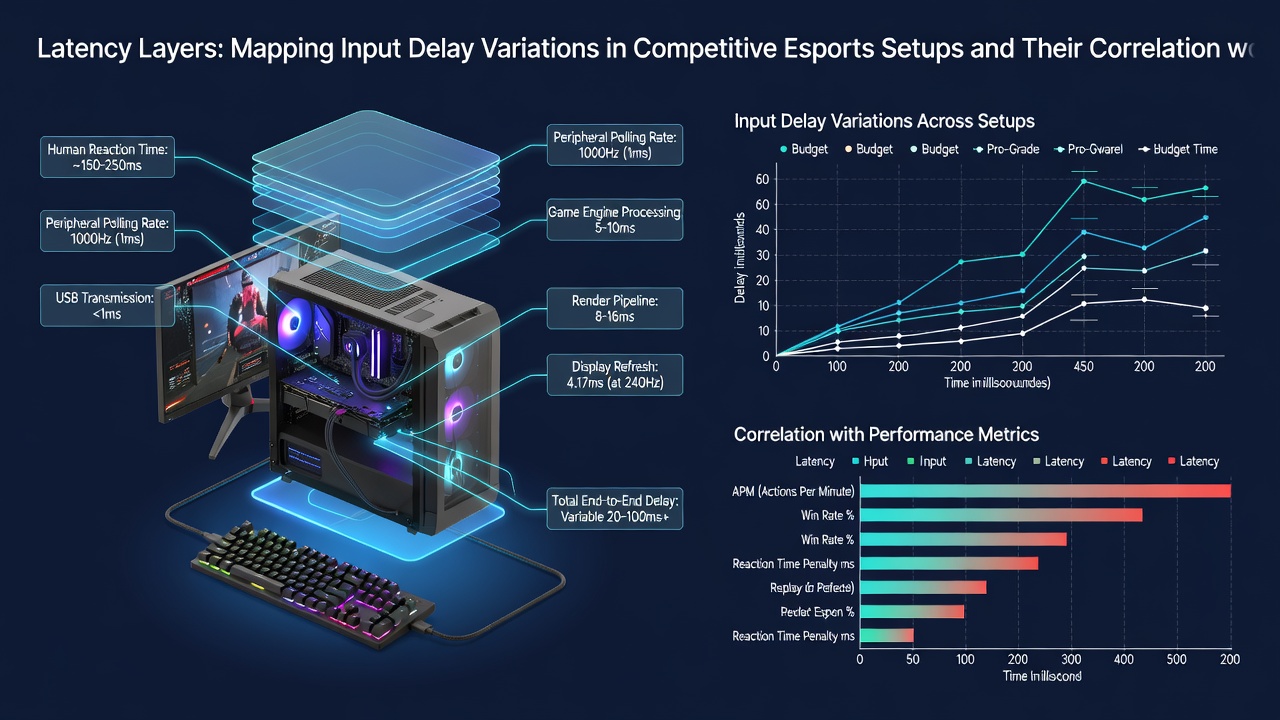
One analysis of professional Counter-Strike matches demonstrated that teams maintaining average input delays below 30 milliseconds secured win rates approximately 7 percentage points above those with delays exceeding 50 milliseconds, and similar trends appear in fighting game circuits where frame-perfect inputs decide round outcomes. Canadian university researchers cross-referenced hardware logs with match results and found that players who upgraded to 360-hertz displays and low-latency USB controllers showed measurable improvements in first-shot accuracy during controlled testing sessions.
Statistical Correlations with Win Rates
Figures released by industry monitoring groups indicate that input delay variations account for roughly 12 to 18 percent of performance variance in fast-paced esports environments after controlling for player skill ratings, and regression models applied to large match datasets highlight stronger effects in games with sub-100-millisecond reaction windows. Players who switch between wired and wireless peripherals during practice sessions often record differences of 5 to 9 milliseconds in measured response times, and longitudinal tracking shows that consistent use of minimized-latency configurations aligns with improved placement in regional leaderboards.
According to reports from the Esports Research Network, hardware standardization efforts at select events have narrowed the spread of total system latency across competitors, yet individual setup choices still produce noticeable differences that appear in aggregated performance metrics. Data collected during the 2026 summer season further illustrates how regional server proximity influences effective latency, with players located nearer to tournament hubs recording lower average delays and correspondingly higher round-win percentages.
Hardware and Software Adjustments Observed in Practice
Technicians routinely disable background processes and enable game-mode display settings to shave additional milliseconds from processing queues, and teams have documented cases where driver updates altered USB polling behavior enough to shift measured input times by 2 to 4 milliseconds. Observers tracking professional rosters note that many organizations now conduct pre-tournament latency audits using standardized testing protocols, allowing players to identify and mitigate specific bottlenecks before matches begin.
Research published through Australian academic channels examined mobile esports setups and discovered that touch-screen input paths introduce different delay profiles compared with physical controllers, with variations tied to screen sampling rates and operating system touch handling routines. These distinctions become relevant when cross-platform titles permit mixed input methods within the same competitive pool.
Conclusion
Mapping input delay layers provides tournament organizers and players with concrete data for evaluating hardware configurations, and the accumulated evidence from multiple regions shows measurable associations between reduced total latency and elevated win rates in fast-paced competitive titles. Continued collection of performance metrics during events scheduled through late 2026 will supply additional datasets for refining these correlations across evolving hardware standards.