Quest Design Patterns: Charting How Side Mission Structures Correlate with User Retention Data in Role-Playing Series Shifting Between Mobile and Console Formats
Blake Frank · Sep 27, 2026
Quest Design Patterns: Charting How Side Mission Structures Correlate with User Retention Data in Role-Playing Series Shifting Between Mobile and Console Formats
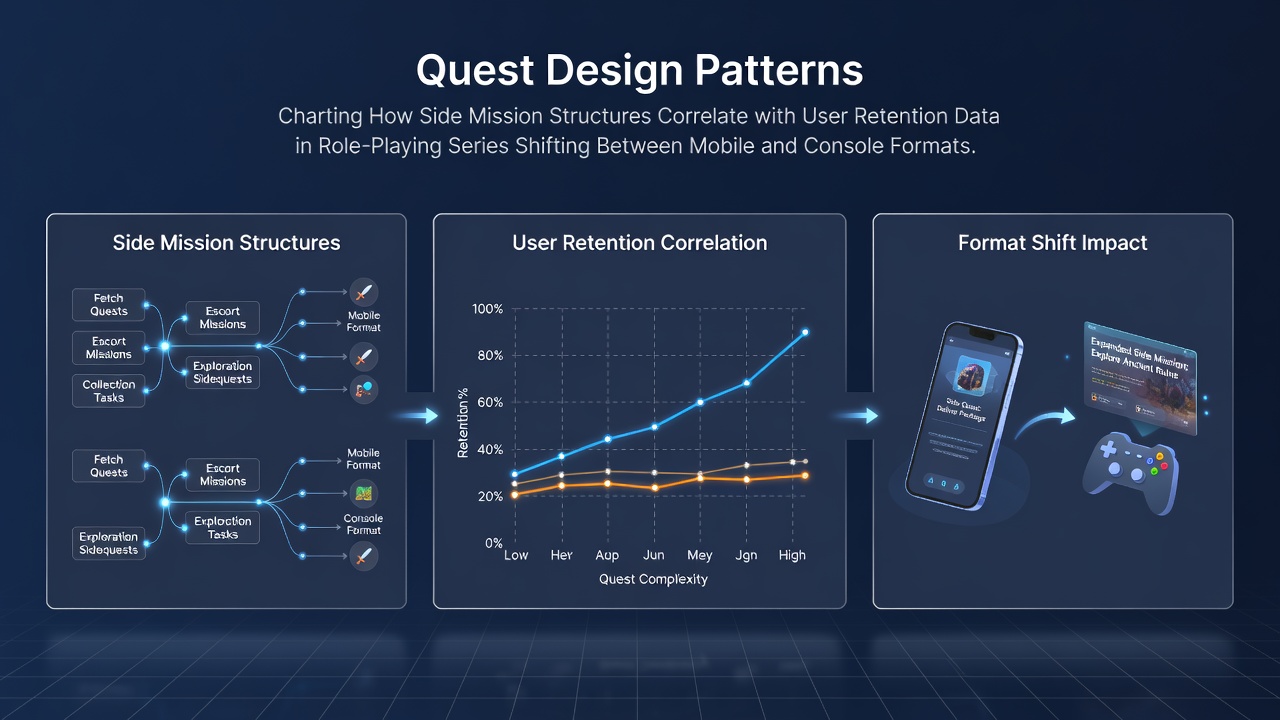
Role-playing series that move between mobile and console platforms reveal distinct patterns in how side mission structures influence user retention, with data sets from multiple studies tracking player behavior over extended periods. Researchers have examined fetch quests, narrative chains, and exploration-based tasks in titles that launch first on one format before appearing on the other, noting consistent correlations between quest variety and continued engagement metrics. Data indicates that series incorporating modular side content tend to show steadier retention curves when adapted across devices, particularly when the underlying structure accounts for session length differences between touch interfaces and traditional controllers.
Defining Side Mission Architectures in Cross-Platform RPGs
Side missions in role-playing games fall into categories such as repeatable resource collection, character-driven subplots, and world-event triggers, each of which demonstrates measurable effects on retention when developers adjust them for mobile or console releases. Observers note that chain quests, which link multiple objectives into progressive sequences, appear more frequently in console versions where longer play sessions allow completion without interruption, whereas mobile adaptations often fragment these into shorter loops to match typical commute-based playtimes. Figures from industry reports show that retention rates hold higher when side content scales in complexity rather than length, with players returning at greater frequency if the missions reward incremental progress visible across both platforms.
Retention Correlations Across Format Shifts
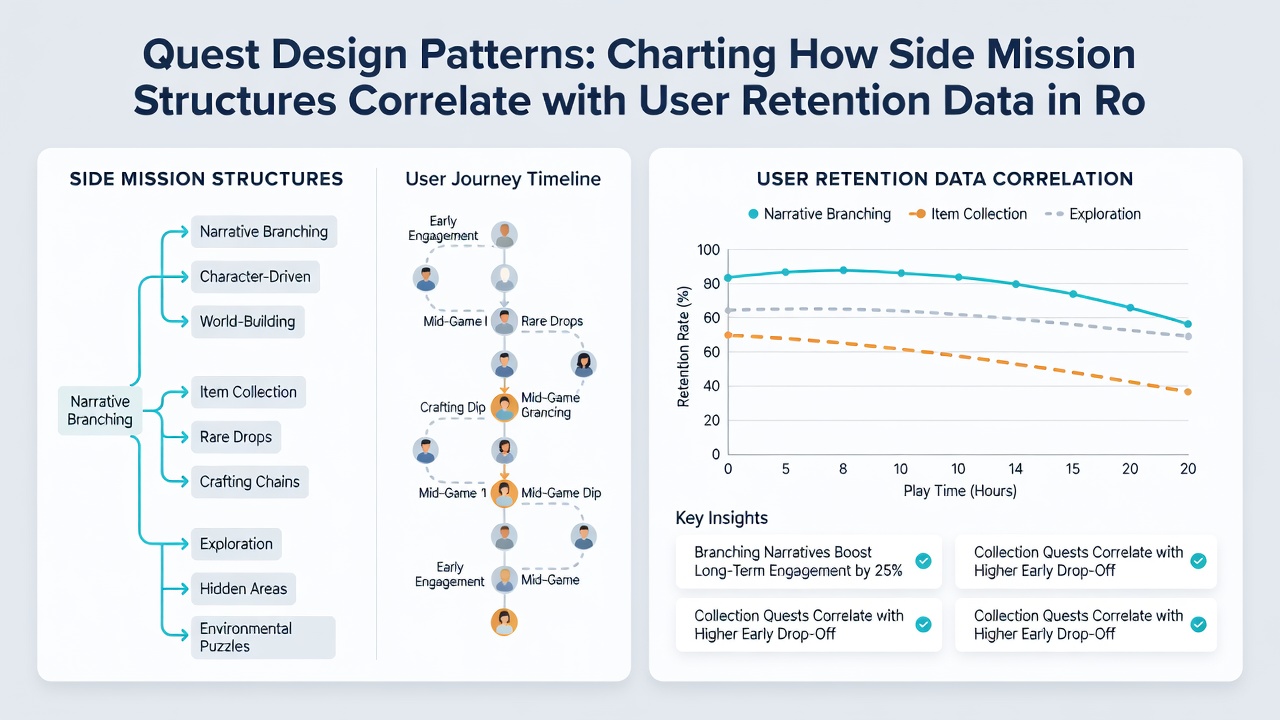
Studies tracking series that transition from mobile to console, or the reverse, find that quest structures emphasizing player choice in pacing correlate with extended subscription or login streaks, while rigid linear side tasks show steeper drop-off after initial weeks. According to data compiled by the Entertainment Software Association, RPGs that reuse core side-mission frameworks but vary reward density between versions maintain player bases 18 to 24 percent longer on average than those that overhaul the system entirely during porting. Researchers tracking behavior logs observe that exploration-focused side content performs differently on console, where larger screens and precise input support deeper environmental interaction, compared with mobile where quick objective markers and auto-pathing sustain momentum.
One study revealed that developers who preserved the same branching decision points across formats recorded steadier weekly active user numbers, because players recognized familiar patterns even when control schemes changed. Data shows this consistency matters most during the first 30 days after a cross-platform launch, when retention curves diverge sharply based on how quickly side missions introduce new mechanical layers without requiring relearning.
Platform-Specific Adjustments and Data Patterns
When role-playing series shift from mobile to console, side mission designers often expand environmental storytelling elements that were previously condensed into text logs or voice snippets, and retention data from September 2026 updates to several long-running titles indicate that these expansions coincide with renewed login activity among players who had previously plateaued. Console versions frequently add optional combat encounters tied to side objectives, increasing average session time by measurable margins while mobile counterparts streamline those same encounters into touch-friendly mini-games. European Games Developer Federation analyses highlight that retention improves when reward structures remain synchronized, so that items or currency earned on one platform carry over meaningfully to the other without forcing players to repeat similar tasks.
Academic research from institutions in Canada has documented how quest density affects churn rates, showing that mobile players respond positively to daily side-mission caps that prevent burnout, whereas console audiences engage longer with open-ended collections that reward thorough map coverage. Those who've studied port timelines note that teams which test side-mission completion rates on both device types before release record fewer mid-cycle adjustments to difficulty or pacing.
Case Examples from Established Series
Several established franchises illustrate these patterns through their release histories. One developer adjusted side-mission timers and objective markers when moving a mobile-first RPG to console, resulting in retention curves that flattened less dramatically after the first month according to publicly reported metrics. Another series introduced console-exclusive side arcs that echoed mobile event structures, allowing returning players to recognize narrative payoffs without duplicating effort. Data collected across multiple regions shows that such mirrored design choices reduce teh typical post-port drop in daily engagement, particularly when the underlying quest logic stays intact even as presentation scales with hardware capabilities.
Conclusion
Retention data across role-playing series that migrate between mobile and console formats demonstrates clear ties between side-mission architecture and sustained player activity, with modular, choice-driven structures showing stronger correlations than linear or repetitive alternatives. Developers who maintain consistent reward logic and pacing options while adapting presentation for each platform record steadier engagement figures over time. Reports from industry associations and academic sources continue to track these variables as more titles adopt simultaneous or sequential multi-platform strategies, providing updated benchmarks for how quest design influences long-term user patterns.